


The "Silent Thief" of Sight: Why You Won't Know You Have Glaucoma Until It’s Too Late
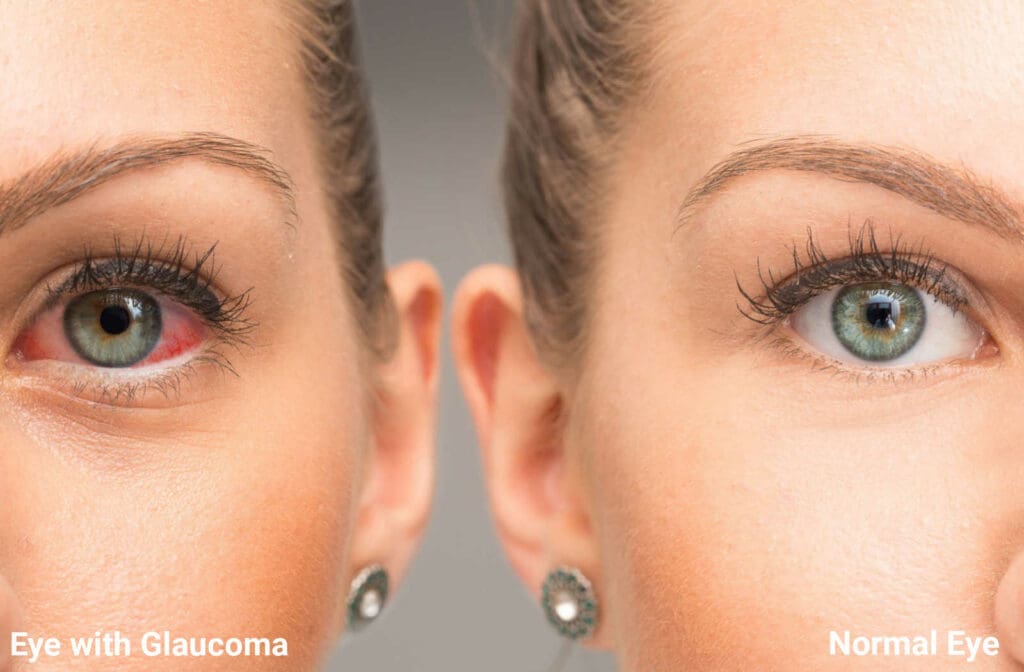
The Silent Thief: Why Glaucoma Management is Critical
Glaucoma is often called the "silent thief of sight" because, in its most common forms, it has no pain and no symptoms in the early stages. By the time a patient notices "tunnel vision" or blurry patches, permanent and irreversible damage to the optic nerve has already occurred.At our offices in Downtown Houston, Sugar Land, and Webster, we don't just check your "air puff" pressure. We provide comprehensive medical management to catch this thief before it steals your independence.
Medical Eye Exam vs. Routine Vision Test
Many people assume that if they can read the 20/20 line on a chart, their eyes are healthy. However, a routine vision test for glasses is not a medical evaluation.As a Therapeutic Optometrist Downtown Houston, our doctors are licensed to treat glaucoma as a medical condition. We look past your prescription to the health of the optic nerve—the "cable" that connects your eye to your brain.
How We Detect What You Can’t Feel
Early detection is the only way to prevent vision loss. We utilize a suite of advanced "Medical Optometry" technology to monitor your eye health:- Optical Coherence Tomography (OCT): Think of this as an MRI for your eye. It allows us to see microscopic thinning of the nerve fibers long before you lose any vision.
- Visual Field Testing: To map your peripheral vision and ensure there are no "blind spots" developing.
- Pachymetry: Measuring corneal thickness to accurately calculate your internal eye pressure.
The "Evolutionary" Approach to Treatment
If you are diagnosed with glaucoma or are a "glaucoma suspect," our goal is to lower your intraocular pressure (IOP) to a safe level. This may include:- Medicated Eye Drops: To reduce fluid production or improve drainage.
- Selective Laser Trabeculoplasty (SLT) Co-management: We work with top surgeons for laser interventions when drops aren't enough.
- Lifestyle & Wellness: Emerging research suggests that light exposure and systemic health play a role in nerve protection. We often discuss how Low-Level Light Therapy (LLLT) and overall wellness impact your long-term ocular health.
Who is at Risk?
While anyone can develop glaucoma, you should be especially vigilant if you:- Are over the age of 60.
- Have a family history of the disease.
- Have high myopia (nearsightedness)—which is why our Ortho-K for Myopia Management in Sugar Land is so vital for children’s long-term health.
- Have certain medical conditions like diabetes or high blood pressure.
Conclusion: Early Detection is Your Only Defense
You can't get back the vision you lose to glaucoma, but you can protect what you have. If it’s been more than a year since your last medical eye evaluation, don't wait for symptoms to appear.


WHERE TO FIND US Our Locations

© 2025 Evolutionary Eye Care . All Rights Reserved. Accessibility Statement - Privacy Policy - Sitemap
Powered by:

