


Is Your Vision Actually "Ghosting" You? The Hidden Signs of Keratoconus
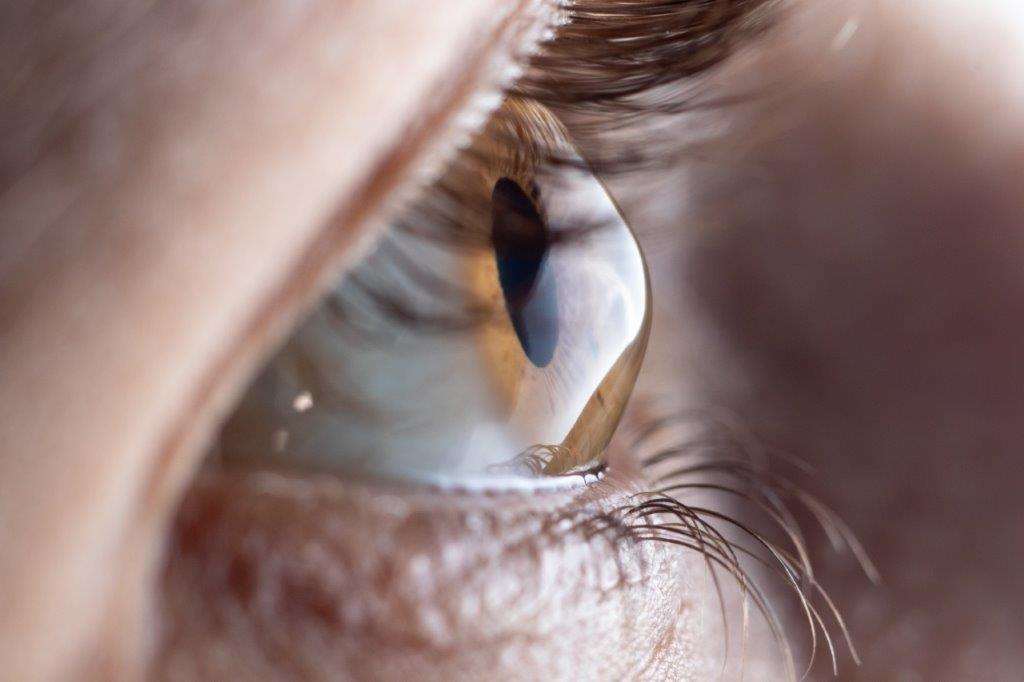
When "Blurry" Becomes Distorted: Living with Keratoconus
Most people think vision problems are just about being "nearsighted" or "farsighted." But for those living with Keratoconus, the issue isn't just the distance—it’s the shape of the eye itself.If you’ve noticed that streetlights look like "starbursts" at night, or if you see "ghost images" around text even with your glasses on, you might be dealing with a thinning, cone-shaped cornea.
What Exactly is Keratoconus?
In a healthy eye, the cornea is a smooth, round dome. With Keratoconus, the corneal tissue thins and gradually bulges outward into a cone shape. This irregularity scatters light as it enters the eye, creating a distorted image that glasses simply cannot "un-distort."The Red Flags You Shouldn't Ignore
Keratoconus often begins in the late teens or early twenties. Because it progresses slowly, many people don't realize there is an underlying issue until their vision significantly changes. Watch for:- Frequent Prescription Changes: Needing a new pair of glasses every few months.
- Ghosting: Seeing a faint "double" image slightly offset from the main object.
- Halos and Starbursts: Difficulty driving at night due to glare.
- Eye Rubbing: A common habit that may actually contribute to the progression of the disease.
Modern Solutions: From Progression to Protection
The goal of Keratoconus treatment has evolved. We don't just want you to see better; we want to stop the disease from getting worse.
- Corneal Cross-Linking (CXL): This is the gold standard for stopping progression. By using specialized UV light and B2 vitamins, we can strengthen the corneal fibers to "lock" the shape of the eye in place.
- Advanced Imaging: We use topography to map every peak and valley of your cornea, allowing us to monitor changes at a microscopic level.
- Specialty Optics: As discussed in our previous post on Scleral Lenses, we can often bypass the irregular shape of your cornea entirely to provide the crisp, clear vision you thought was lost.
Don't Wait for the "Blur" to Get Worse
The earlier we detect Keratoconus, the more options we have to preserve your sight. If your vision feels "off" despite your current glasses, it’s time for a specialized corneal evaluation.


WHERE TO FIND US Our Locations

© 2026 Evolutionary Eye Care . All Rights Reserved. Accessibility Statement - Privacy Policy - Sitemap
Powered by:

