


Seeing Clearly Without the Drops: The Rise of Non‑Dilated Eye Exams in 2025
Introduction
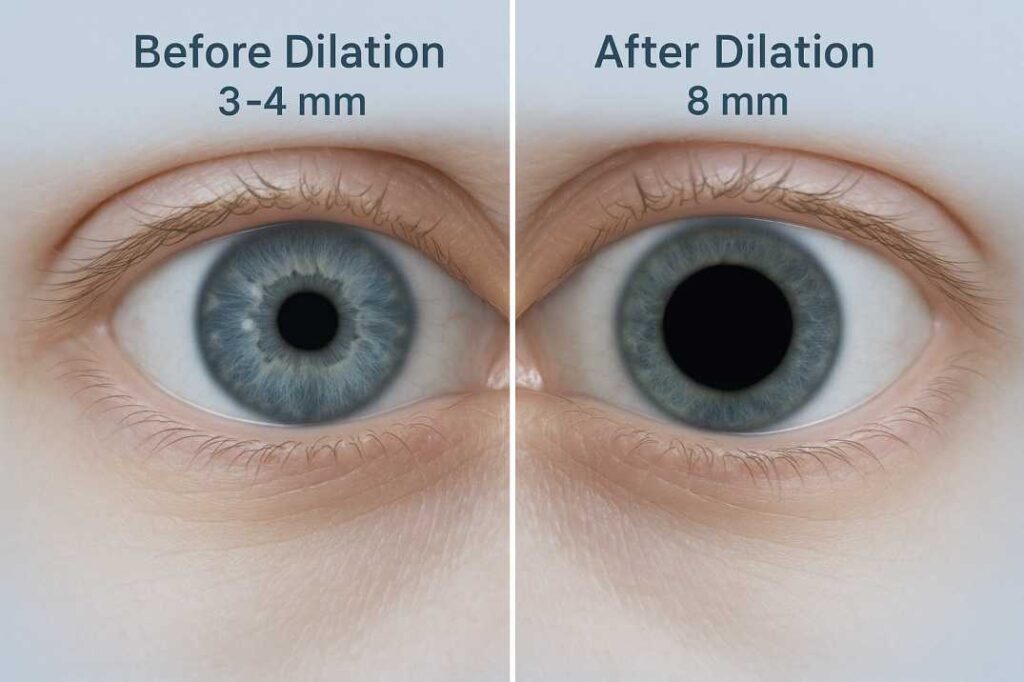
For many patients, pupil dilation is the least favorite part of an eye exam. Blurry vision, light sensitivity, and hours of downtime can make scheduling an exam inconvenient—especially during a workday. In 2025, advances in retinal imaging are changing this experience. More optometry clinics across the U.S. are offering non‑dilated eye exams using ultra‑widefield imaging and enhanced scanning technology.
But does skipping dilation mean skipping important eye health information? The answer depends on the patient, the technology used, and the reason for the exam.
What Is a Non‑Dilated Eye Exam?
A non‑dilated eye exam uses advanced retinal imaging systems that capture detailed photos of the back of the eye without the need for dilation drops. These systems can provide a wide view of the retina, optic nerve, and blood vessels within seconds.
Unlike traditional dilation, which chemically enlarges the pupil, these imaging tools rely on optical design and scanning speed to see through a naturally sized pupil.
Why Non‑Dilated Exams Are Becoming More Popular
Improved Patient Experience
Patients can return to work, drive, or use screens immediately after the exam.
Faster Clinic Flow
Non‑dilated imaging reduces appointment time and allows clinics to see patients more efficiently.
Earlier Screening Acceptance
Patients who previously avoided eye exams due to dilation discomfort are more likely to attend routine visits.
High‑Resolution Documentation
Digital retinal images allow clinicians to track subtle changes over time and educate patients visually.
What Non‑Dilated Exams Can Detect
Retinal hemorrhages and vascular changes
Optic nerve abnormalities
Signs of diabetic retinopathy
Macular changes
Large peripheral retinal findings (depending on imaging system)
These exams are especially useful for routine screenings, baseline documentation, and monitoring stable ocular conditions.
When Dilation Is Still Necessary
Despite major advances, non‑dilated exams do not fully replace dilation in every situation. Dilation remains essential when:
Peripheral retinal disease is suspected
Symptoms such as flashes, floaters, or sudden vision loss are present
Glaucoma progression requires detailed optic nerve evaluation
Pediatric or high‑risk patients need comprehensive retinal assessment
In these cases, dilation provides the most complete view of the retina and allows for thorough clinical evaluation.
What Patients Should Know
Non‑dilated exams improve comfort, but they may not always replace dilation
Your optometrist may still recommend dilation based on your health history
Imaging results should be reviewed alongside a full eye exam—not in isolation
Declining dilation should be an informed decision, not a default choice
What This Means for Optometry Practices
Clinics adopting non‑dilated imaging must clearly communicate exam limitations while emphasizing its benefits. Combining advanced imaging with professional judgment ensures patients receive both convenience and quality care.
As technology continues to evolve, the future of eye exams will likely be hybrid—balancing patient comfort with clinical necessity.
Final Thoughts
Non‑dilated eye exams represent a meaningful step forward in patient‑centered eye care. While they don’t eliminate the need for dilation entirely, they offer a practical, efficient option for many routine visits. The key lies in using the right tool for the right patient at the right time.
Clear vision begins with informed care—and that includes understanding how your eye exam is performed.


WHERE TO FIND US Our Locations

© 2026 Evolutionary Eye Care . All Rights Reserved. Accessibility Statement - Privacy Policy - Sitemap
Powered by:

