


Why Regular Contacts Fail — And Why Scleral Lenses Are Changing Lives
What Are Scleral Lenses?
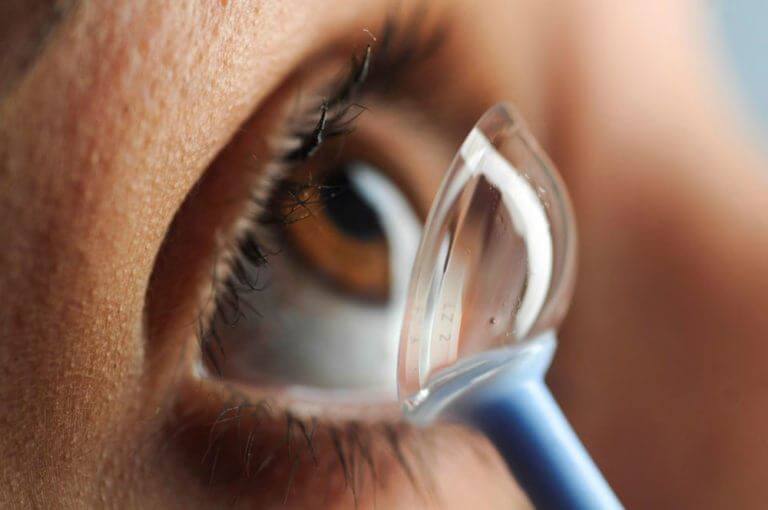
Scleral lenses are large-diameter, gas-permeable contact lenses designed to vault over the cornea and rest on the sclera (the white part of the eye). Unlike standard contact lenses, they do not touch the sensitive corneal surface, making them uniquely suited for patients with complex eye conditions.
Originally developed for severe corneal disease, scleral lenses are now widely used in modern optometry due to advances in lens design, imaging, and customization.
Who Benefits Most from Scleral Lenses?
Scleral lenses are often recommended for patients who have not achieved good vision or comfort with traditional glasses or soft contact lenses. Common indications include:
Keratoconus and corneal ectasia
Post-surgical corneas (LASIK, PRK, corneal transplant)
Severe dry eye disease
Irregular astigmatism
Ocular surface disease
Certain low vision conditions
For many patients, scleral lenses provide clearer vision than glasses ever could.
How Scleral Lenses Improve Vision and Comfort
The space between the lens and the cornea is filled with sterile saline, creating a smooth optical surface. This liquid reservoir:
Neutralizes corneal irregularities
Protects the cornea from exposure and dryness
Improves visual clarity
Reduces light sensitivity and discomfort
This combination makes scleral lenses both a vision correction and therapeutic tool.
Why Scleral Lenses Are Gaining Popularity in the U.S.
As awareness grows and technology improves, more optometry clinics are expanding their specialty contact lens services. Patients are also seeking alternatives to surgery or long-term medication use, making scleral lenses an increasingly attractive option.
Additionally, modern diagnostic tools allow for more precise fittings, improving success rates and patient satisfaction.
What to Expect During a Scleral Lens Evaluation
A scleral lens fitting is more detailed than a standard contact lens exam. It may include:
Advanced corneal imaging
Tear film assessment
Trial lens fitting
Customized lens design
Training on insertion, removal, and care
While the process requires time and expertise, the results are often life-changing for patients.
Final Thoughts
Scleral lenses represent one of the most impactful advances in modern optometry. For patients with complex vision needs, they offer clarity, comfort, and confidence when other options fall short.
If standard vision correction hasn’t worked, scleral lenses may be the solution that finally does.
Want to find out more, watch this video from Dr. Pillai?
https://youtu.be/fY6B4Ad11o4?si=tSxOIM839-_0sg55
Dr. Pillai walks you through how to properly prepare and wear scleral lenses, including the essential tools and solutions that help ensure comfort, clarity, and eye health.
In this video, we cover:
• Proper scleral lens insertion technique
• Lens prep and hygiene tips
• Tools and solutions that support a smooth experience
Products mentioned:
ScleralFil • Nutrifill • Tangible Clean • LensBase • S5 Scleral Lens Inserter • SeeGreen Device
If you wear scleral lenses—or are considering them—this guide will help you feel more confident and prepared.
Originally developed for severe corneal disease, scleral lenses are now widely used in modern optometry due to advances in lens design, imaging, and customization.


