


Seeing Double Isn’t Normal: Why Eye Teamwork Matters More Than You Think
Seeing Clearly Requires Teamwork
Most people assume that if each eye sees clearly on its own, their vision must be fine. In reality, comfortable and efficient vision depends on how well both eyes work together as a team. When that coordination breaks down, symptoms can appear even if a standard eye exam looks “normal.”
This is where a binocular vision evaluation becomes essential.
What Is Binocular Vision?
Binocular vision refers to the ability of both eyes to align, focus, and move together accurately. When the eyes work in sync, the brain merges the two images into a single, clear picture with depth and stability.
When they don’t, the brain must work harder—often leading to discomfort or visual confusion.
Common Signs of Binocular Vision Problems
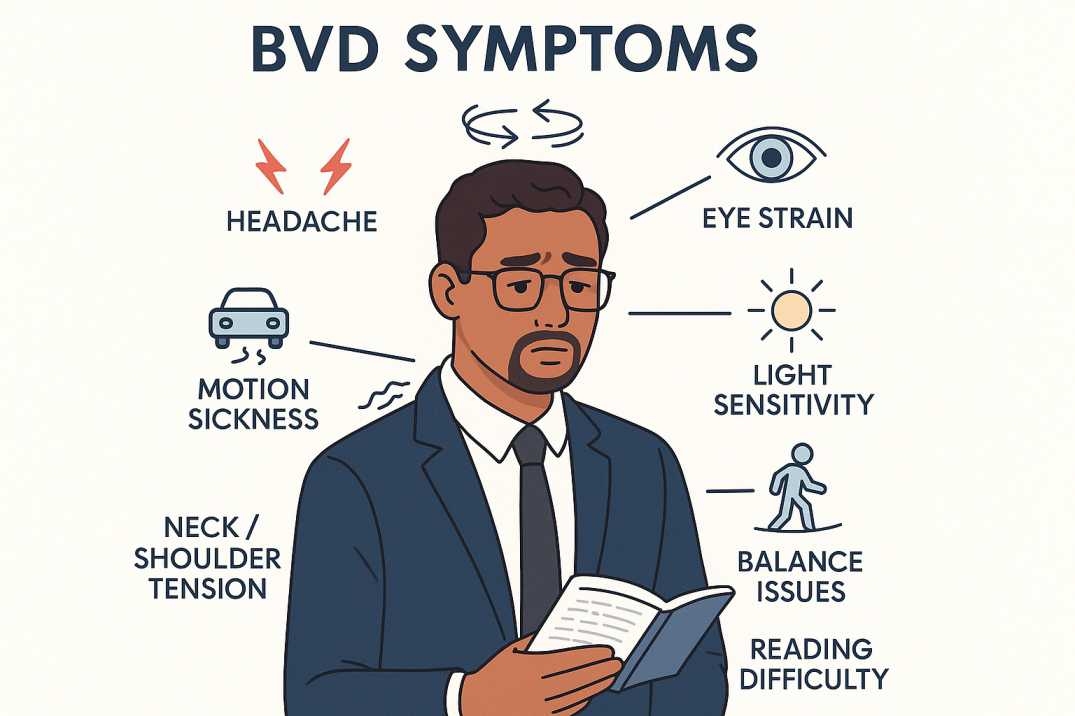
Binocular vision issues are more common than many people realize and may cause:
Eye strain or fatigue
Headaches, especially after reading or screen use
Difficulty focusing or sustaining attention
Double or shadowed vision
Skipping lines while reading
Poor depth perception
Motion sensitivity or dizziness
Children and adults may experience symptoms differently, and many adapt without realizing vision is the root cause.
What Happens During a Binocular Vision Evaluation?
A binocular vision evaluation goes beyond the eye chart. It assesses how the eyes function together during real-world tasks. Testing may include:
Eye alignment at distance and near
Eye movement accuracy and tracking
Focusing flexibility
Depth perception
Visual stamina during sustained tasks
The goal is to identify subtle coordination issues that affect daily life.
Who Should Consider a Binocular Vision Evaluation?
This type of evaluation is especially helpful for individuals who:
Struggle with reading or prolonged screen work
Experience unexplained headaches or eye discomfort
Have a history of concussion or neurological injury
Notice visual fatigue despite updated prescriptions
Have children with attention or learning concerns
Early detection can prevent years of unnecessary strain.
How Binocular Vision Issues Are Managed
Treatment depends on the specific diagnosis and may include:
Customized vision therapy programs
Specialized lenses or prism correction
At-home visual exercises
Ergonomic and visual habit adjustments
Many patients experience significant improvement once eye coordination is properly addressed.
Why Binocular Vision Care Is Gaining Attention
As screen time increases and visual demands become more intense, binocular vision problems are being identified more frequently. Modern optometry recognizes that comfort and performance are just as important as clarity.
Binocular vision evaluations help bridge that gap.
Final Thoughts
Seeing clearly isn’t just about how sharp vision is—it’s about how efficiently the eyes work together. Binocular vision evaluations uncover hidden issues that can affect comfort, productivity, and quality of life.
For many patients, improving eye teamwork is the missing piece to truly comfortable vision.


WHERE TO FIND US Our Locations

© 2026 Evolutionary Eye Care . All Rights Reserved. Accessibility Statement - Privacy Policy - Sitemap
Powered by:

