


The Invisible Injury: When Your CT Scan is Clean but Your World is Spinning
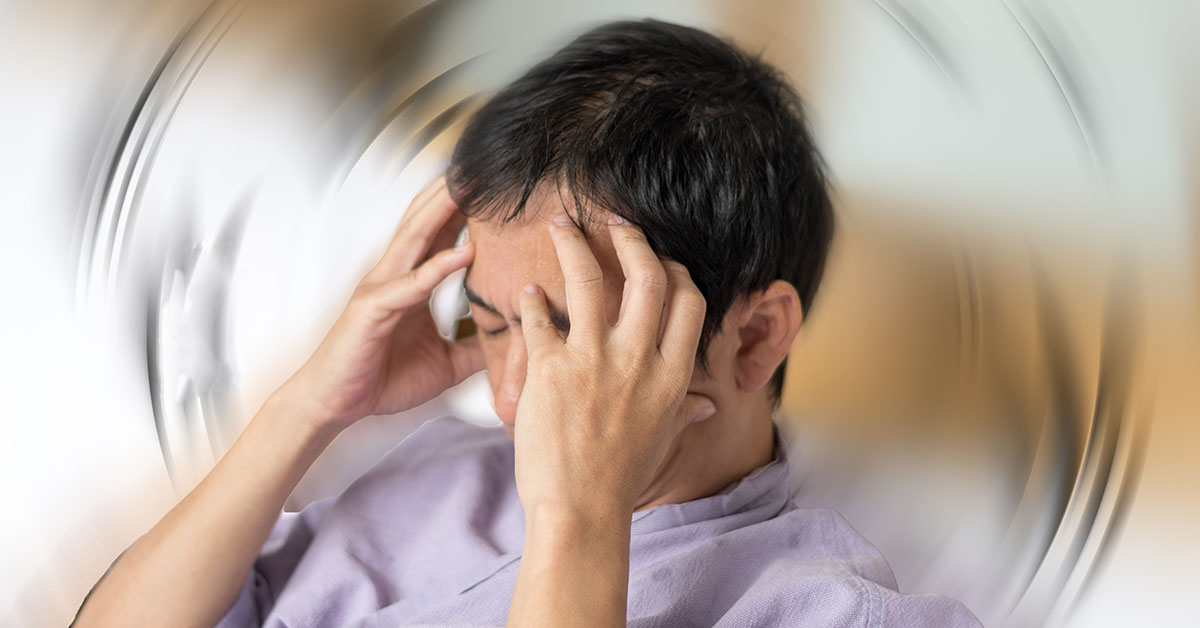
The Invisible Injury: When Your CT Scan is Clean but Your World Spins Anyway
Few things frustrate patients and doctors more than this: you take a hit to the head—maybe from a car accident on I-45, a slip in your kitchen, a soccer ball to the face in Sugar Land, or a workplace mishap downtown. You end up in the ER, run through the standard tests, and get a CT or MRI. The doctor comes back and says your brain looks fine—no bleeding, no dangerous swelling. You get the usual advice: go home, take it easy, and you’ll be back to normal in a few weeks.But then you don’t. Weeks turn into months. Something’s still wrong.
Staring at your phone or laptop for ten minutes leaves you dizzy and sick to your stomach. Bright lights in a Webster grocery store or the noise of a crowd knocks you off balance. Even reading a single page gives you a headache, like someone’s drilling right behind your eyes. Tell your doctor, and your vision checks out as perfect—20/20—so what’s going on?
If this sounds familiar, you’re not alone. At Evolutionary Eye Care, we see it all the time. Here’s reality: half the wiring in our brains is dedicated to vision. A concussion hardly ever messes with the basic structure of your eyeball, but it can quietly scramble the fragile connections between your eyes, your balance system, and your brain. It’s called Post-Traumatic Vision Syndrome (PTVS).
So, what is PTVS?
When your head whips forward or back—whether from a blow, a fall, or even a sudden stop—nerve fibers connecting your brainstem to your visual cortex get stretched and inflamed. Normally, your visual and balance systems talk constantly, making sure you know where you are and what’s coming. But after a concussion, that conversation falls apart, and three key problems show up at once:
1. The Vestibular-Ocular Reflex (VOR) Breaks Down
This reflex is what keeps the world stable when you move your head. Lose it, and every head movement shakes your vision. Suddenly, the world feels “bouncy,” you can’t keep up visually, and motion sickness becomes the norm.
2. Focusing Up Close Gets Excruciating
Your brain can’t keep your eyes working together. Try to read and you’ll find the words starting to blur, the lines doubling, your eye muscles giving up. Reading turns into a battle—one that you lose quickly.
3. Light Sensitivity and Spatial Disorientation
Everyday lighting—fluorescent bulbs at work, LED screens, even headlight glare—turns brutal. Your brain can’t filter or coordinate what your eyes see, so too much visual input feels like panic in your chest and fog in your brain.
Why Standard Glasses Don’t Help
Maybe you grab your prescription glasses, hoping it’ll fix things. Sadly, if you’ve got PTVS, your distance vision on the chart can look perfect, but just getting through a workday or scrolling your phone is a nightmare. Standard glasses correct clarity, but not the broken brain-eye conversation.
With PTVS, you’ll notice some trademark issues:
- You look at a sign across the room and see it perfectly, but it takes effort—real strain.
- Screens give you instant headaches, dizziness, or nausea.
- Walking feels weird: bumping into doorframes, feeling like you’re drifting sideways, or getting shaky legs in open spaces.
- Bright lights become torture.
How Do We Treat This? The Neuro-Optometric Way
Basic rest helps with the initial brain swelling, but it doesn’t rebuild the pathways that control how your eyes work with your brain. For that, you need targeted neuro-visual rehab—something we’ve built our clinics in Webster, Houston, and Sugar Land around. Here’s what actually makes a difference:
1. Micro-Prism Realignment (Neurolens®)
Mild concussions can knock your eyes out of subtle alignment. We screen for these small misalignments and prescribe custom micro-prism lenses that coax your eyes back into their natural position, instantly relieving headaches, neck pain, and eye fatigue.
2. Syntonic Phototherapy
This barely gets mentioned at ordinary eye clinics, but it helps: we use carefully chosen wavelengths of light–delivered through special tinted filters–to calm your nervous system. Many people find their light sensitivity plummets and their anxiety fades after just a few sessions.
3. Vestibular-Ocular Tracking Drills
We walk you through simple, specific eye-head training exercises that restore the automatic reflexes hijacked by injury. Over time, the sickening motion sensitivity, the screen intolerance—you start regaining normal function.
Don’t Forget About Dry Eye
It’s not just nerves getting scrambled. People with PTVS work extra hard to focus, so their blink rate can drop by 70%. Your eyes dry out, making light sensitivity twice as bad. We tackle this too—with gentle Low-Level Light Therapy (LLLT) that cleans out clogged oil glands, rehydrates your eye surface, and keeps your lenses working the way they’re supposed to.
Medical Exam vs. Routine Vision Test
Here’s the bottom line: the usual eye chart doesn’t catch PTVS. You need a real medical eye workup—a full neuro-optometric evaluation. We look at things like eye movement speed, eye teaming endurance, and how your brain processes moving vs. still images.
If you want to see how this works, check out our interactive “Concussion Recovery & Neuro-Optometric Assessment” on our YouTube channel. There’s science behind this, and we’re happy to show you.
Reclaiming Your Life
Living with never-ending dizziness, nausea, and brain fog after a head injury isn’t just unlucky—it’s a real, fixable disconnect in your neuro-visual system. The right therapy can flip the switch. We’ve seen hundreds of people get their focus, balance, work lives, and hobbies back. All it takes is the right tools: micro-prism correction, light therapy, and surface treatments, backed by a team that knows what to look for.
You don’t have to settle for a life that’s always spinning. Recovery is possible. Let’s get you there.


WHERE TO FIND US Our Locations

© 2026 Evolutionary Eye Care . All Rights Reserved. Accessibility Statement - Privacy Policy - Sitemap
Powered by:

