


Why the Thick Houston Air is Secretly Starving Your Eyes of Moisture
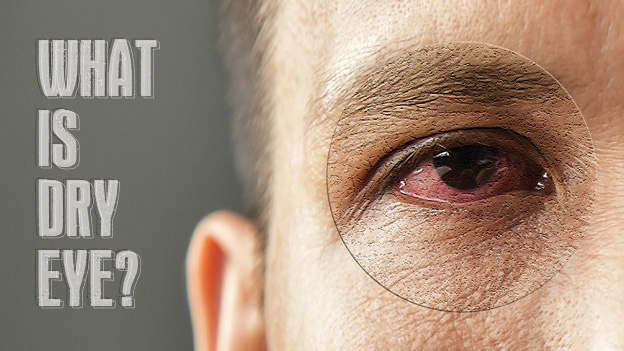
The Gulf Coast Paradox: When 80% Humidity Meets 0% Relief
If you live in Downtown Houston, Sugar Land, or Webster, you are intimately familiar with the atmospheric "weight" of our climate. With summer humidity levels routinely cresting at 80%, logic suggests our region should be a sanctuary for anyone battling Chronic Dry Eye. Yet, our clinics are consistently filled with the same frustrated question: "Why do my eyes feel like sandpaper when it is so incredibly humid outside?"
As of May 2026, we have identified this phenomenon as the Gulf Coast Humidity Paradox. The reality is that our absolute reliance on high-velocity, indoor air conditioning creates a destructive environmental "whiplash" that vaporizes the tear film faster than the Texas sun can replenish it.
The Physics of the Evaporative Seal
To understand the paradox, we must look at the Lipid Layer?a micro-thin architectural seal secreted by the Meibomian glands. This layer acts as the "lid" for your eyes, preventing the underlying watery tears from evaporating into the atmosphere. In the Houston environment, two specific triggers destabilize this delicate defense:- The A/C Desiccation Trap: To combat the external heat, our indoor spaces blast forced-air air conditioning. This air has near-zero humidity. When you transition from the thick outdoor air to a freezing office building or vehicle, the sudden drop in relative humidity causes your tears to evaporate at double the physiological rate.
- The Contamination Breach: High humidity induces intense facial sweating. As sweat?laden with salt, sunscreen, and skin oils?drips into the eyes, it alters the delicate pH of the tear film. This contamination breaks the surface tension of the lipid layer, causing your tears to "bead up" and roll down your face like rain on a waxed car, rather than coating the cornea smoothly.
- This cycle triggers Evaporative Dry Eye, typically driven by underlying Meibomian Gland Dysfunction (MGD). If your "oil seal" is already compromised, your eyes stand zero chance against the Texas elements.
The Evolutionary Reset: Low-Level Light Therapy (LLLT)
As specialized Therapeutic Optometrists, we recognize that adding water-based drops to an oil-deficiency problem is a losing battle. At our Dry Eye Center of Excellence Houston, we utilize Low-Level Light Therapy (LLLT) to repair the ocular seal:- Thermal Liquefaction: LLLT uses medical-grade light wavelengths to generate internal cellular heat. This melts the waxy, stagnant blockages within the glands, allowing clear, protective oils to flow naturally once again.
- Inflammatory Down-Regulation: The light energy cools the chemical "fire" triggered by sweat contamination and constant A/C exposure, eliminating the chronic redness and "heavy eye" sensation.
Beyond Comfort: The Performance Quotient
Whether you are an executive navigating a 10-hour screen marathon in a Houston high-rise or an athlete fine-tuning your Sports Vision & Performance in Sugar Land, dry eyes act as a "warped lens." This leads to fluctuating vision, debilitating glare, and a measurable drop in visual reaction speed. For our patients utilizing specialized optics like Scleral Lenses or Ortho-K, a stable, hydrated ocular surface is the non-negotiable foundation for their vision.Medical Evaluation vs. Static Refraction
A routine vision test cannot measure your evaporation rate. Our Medical Eye Exam utilizes Interferometry?advanced imaging that measures the thickness of your oil layer to the nanometer. We track exactly how many seconds it takes for your specific environment to break your tears apart.Conclusion: Lock in Your Natural Moisture
Living in the Gulf Coast shouldn't require a compromise on your comfort. You cannot control the outdoor humidity or the thermostat in your office, but you can fortify your eye?s natural defenses. By utilizing advanced light therapy to restore your protective lipid layer, we help you lock in your natural moisture and reclaim your comfort in the face of the Texas elements.


WHERE TO FIND US Our Locations

© 2026 Evolutionary Eye Care . All Rights Reserved. Accessibility Statement - Privacy Policy - Sitemap
Powered by:

