


When They Tell You "Nothing More Can Be Done"—Why That’s Not the End of Your Vision.
When 20/20 is No Longer the Goal
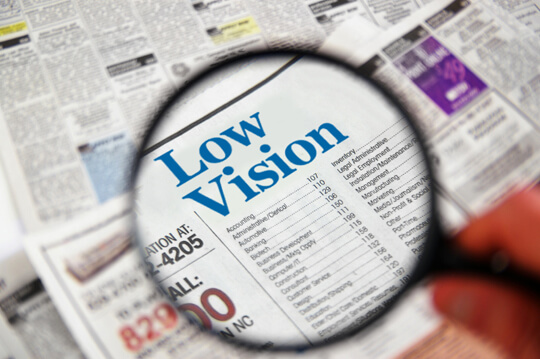
For many patients dealing with advanced Macular Degeneration, Diabetic Retinopathy, or Glaucoma, the news from a surgeon is often: "The surgery was successful, but this is as much as you're going to see." This can feel like a dead end. But at our offices in Sugar Land, Webster, and Downtown Houston, we believe that when "sight" is limited, "vision" can still be expanded. This is where a Low Vision Evaluation begins.
What is a Low Vision Evaluation?
A Medical Eye Exam vs. Routine Vision Test looks for disease; a Low Vision Evaluation looks for function. We don't spend the hour asking which is better, "one or two." Instead, we ask: "What do you want to do that you can't do right now?"Whether it’s reading the mail, seeing the faces of your grandchildren, or watching TV, we use specialized optics to make the most of your remaining sight.
The "Evolutionary" Toolbox
As a Therapeutic Optometrist Downtown Houston, we have access to high-level technology designed to bypass damaged areas of the retina:- Bioptic Telescopes: Miniature telescopes mounted onto glasses to help with distance tasks (and in some cases, driving).
- Prismatic Reading Glasses: High-powered lenses that allow for comfortable reading at very close distances.
- Electronic Magnifiers: Handheld or desktop "CCTV" devices that can change contrast and enlarge text to 50x its original size.
- Syntonic Phototherapy: We sometimes use specific light frequencies to stimulate the functional areas of the visual field that are still active.
Why a Specialty Clinic Matters
Most retail optical shops aren't equipped for the "hard-to-fit" patient. Whether it’s providing Scleral Lenses for Keratoconus in Webster TX or fitting a patient with a telescope for Macular Degeneration, our goal is to provide the custom optics that standard stores simply don't carry.A Multidisciplinary Approach
Living with low vision is a journey. We don't just provide the glasses; we connect you with resources for orientation, mobility, and occupational therapy. We treat the whole patient, ensuring that Chronic Dry Eye Relief in Webster or other secondary issues aren't further complicating your visual experience.Conclusion: Hope is a Visual Aid
If you or a loved one has been told that "nothing more can be done," please know there is a second opinion waiting for you. We don't focus on what you've lost—we focus on how to use what you have.


WHERE TO FIND US Our Locations

© 2026 Evolutionary Eye Care . All Rights Reserved. Accessibility Statement - Privacy Policy - Sitemap
Powered by:

