


Why the I-45 at Night is Becoming a Nightmare (And Why New Glasses Aren't Helping)
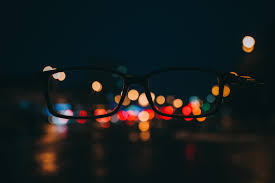
The Neon Blur: When Night Driving Becomes Dangerous
If you live in the Greater Houston area, you know that driving at night is a high-stakes task. Between the sprawling freeway interchanges and the intense LED headlights of modern trucks, your eyes are under constant assault.
Many of our patients in Sugar Land and Webster tell us the same thing: "My daytime vision is okay, but at night, the streetlights have 'halos' and the headlights look like 'starbursts.' I feel like I'm driving blind."
If you?ve updated your glasses and still see these "shadows," you aren't dealing with a simple prescription change. You are dealing with High-Order Aberrations (HOAs).
What are High-Order Aberrations?
Think of your vision as a digital image. A standard prescription (nearsightedness or astigmatism) is like the "focus" setting. But High-Order Aberrations are like "static" or "noise" in the image.Standard glasses and soft contacts can only fix the focus. They cannot fix the static. These microscopic imperfections on your cornea or inside your lens cause light to scatter rather than focusing on a single point.
The Symptom: You see 20/20 on the chart, but you see "ghosts" or "smears" around lights in the dark.
The Cause: This can be natural, but it is often worsened by Keratoconus, past LASIK surgery, or early cataracts.
The Evolutionary Fix: Wavefront-Guided Scleral Lenses
As a Therapeutic Optometrist Downtown Houston, we use technology that retail optical chains simply don't have. To fix night vision, we have to "neutralize" the irregular surface of your eye.Scleral Lenses: Because these lenses vault over the cornea and hold a liquid reservoir, they physically "mask" the imperfections that cause light to scatter.
Wavefront Mapping: We use an aberrometer to map exactly how light enters your eye. This "fingerprint" of your vision allows us to design a lens that compensates for your specific starbursts and halos.
The Result: A dramatic reduction in glare and a massive increase in contrast. For many, it makes the difference between staying home after dark and driving with confidence on the 610 Loop.
The "Dry Eye" Connection
In Webster and Houston, the evening humidity and wind can exacerbate night vision issues. When your eyes are dry, your tear film becomes "bumpy," which adds even more light scatter.At our Dry Eye Center of Excellence Houston, we use Low-Level Light Therapy (LLLT) to stabilize the tear film. By ensuring your "oil pipes" are clear and your tears are smooth, we provide the foundation for crisp, glare-free night vision.
Medical Eye Exam vs. Routine Vision Test
A routine test won't measure your aberrations. You need a Medical Eye Exam that utilizes Corneal Topography and wavefront analysis. If you are an athlete in Sports Vision & Performance, night vision is critical for tracking a ball under stadium lights. If you are a professional in Downtown Houston, it?s critical for a safe commute home.Conclusion: Reclaim the Road
Don't let the fear of night driving shrink your world. Modern medical optics can clear the "static" and restore the clarity you've been missing. Whether you?re heading home from work in Houston or out for dinner in Sugar Land, you deserve to see the road clearly.


WHERE TO FIND US Our Locations

© 2026 Evolutionary Eye Care . All Rights Reserved. Accessibility Statement - Privacy Policy - Sitemap
Powered by:

