


Why Having "Perfect" Eye Pressure Doesn’t Mean Your Vision is Safe from the Silent Thief
The False Sense of Security: When "Normal" Isn't Enough
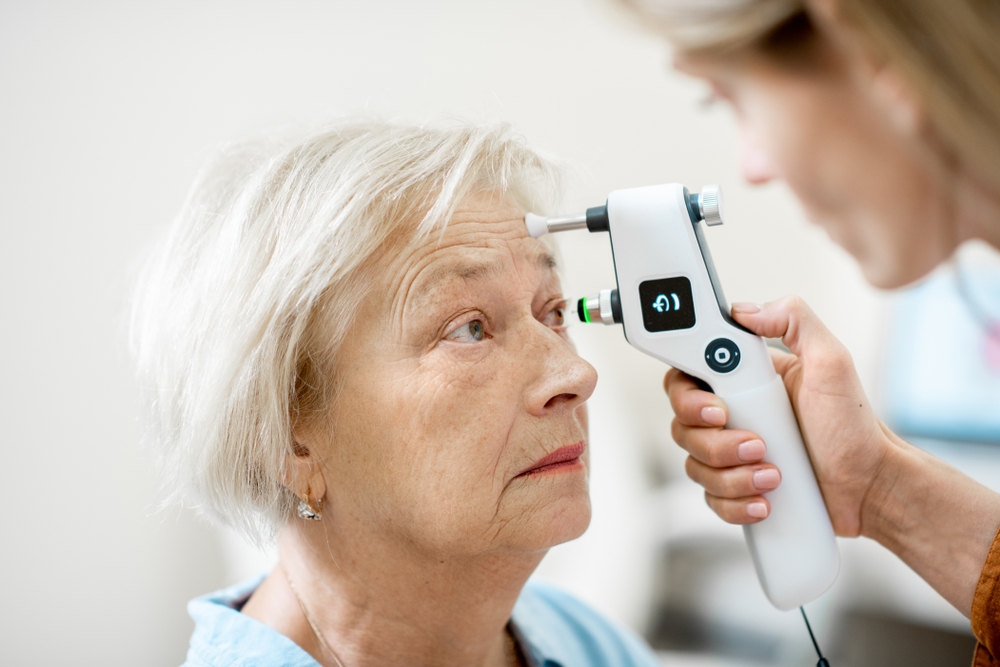
We have all experienced it: that quick, slightly tense moment during an eye exam when you brace yourself for the "air puff" test or look into the blue glowing light. You blink, get through it, and feel an instant wave of relief when your doctor smiles and says, "Your eye pressure is 15. Perfect! No signs of glaucoma here."
You go home to Sugar Land, Webster, or your neighborhood in Houston believing your visual health is locked in for another year.
But what if we told you that half of the patients actively losing their sight to glaucoma walk out of standard eye exams with that exact same "perfect" pressure score?
It is one of the most stubborn, dangerous myths in eye care: the belief that glaucoma is strictly a high-pressure disease. At Evolutionary Eye Care, we want to talk openly about a variation of this condition called Normal-Tension Glaucoma (NTG). It is a quiet, sneaky thief of sight, but when you understand how it actually operates, you can stop it right in its tracks.
The Cable and the Crumble: What is Normal-Tension Glaucoma?
To understand why your sight can be at risk even when your eye pressure is sitting comfortably within the normal range (typically 12 to 21 mmHg), we need to look at the anatomy of the optic nerve.
The optic nerve is the master cable of your vision. It is made up of over a million tiny, delicate nerve fibers that carry visual data from your retina straight to your brain.
[Healthy Blood Flow] ---> [Optic Nerve Cable] ---> [Crisp, Stable Side Vision]
[Restricted Blood Flow / Sleep Apnea] ---> [Optic Nerve Starvation] ---> [Silent Visual Tunneling]
In standard glaucoma, high fluid pressure inside the eye physically pinches and crushes these nerve fibers. But in Normal-Tension Glaucoma, the damage happens without the pressure surge. Instead, the fibers crumble due to a lack of structural support or poor circulation:
The Supply Cutoff: Just like any other muscle or organ in your body, your optic nerve needs a steady supply of oxygen-rich blood. If you have low blood pressure, cold hands and feet (Raynaud's phenomenon), or suffer from migraines, the tiny blood vessels feeding your nerve can spasm or under-deliver.
The Nighttime Drop: Your blood pressure naturally dips when you sleep. But if you suffer from untreated Sleep Apnea, your oxygen levels plummet at night, starving your optic nerve of the baseline energy it needs to survive. Over time, these nightly oxygen drops cause the fragile nerve fibers to slowly wither away.
Because the damage starts in your far peripheral (side) vision, your brain automatically fills in the blanks. You won’t feel any pain, and you won't notice a change in your straight-ahead vision until the disease is highly advanced.
Why a Standard Eye Checkup Misses the Theft
A standard storefront vision test is designed to find your glasses prescription. It measures acuity—how clearly you can focus on a static chart 20 feet away.
Because Normal-Tension Glaucoma selectively damages your peripheral vision first, you can easily maintain a perfect 20/20 visual score while your side vision is actively fading. If your doctor only relies on a quick pressure check and a basic vision chart, NTG will remain completely invisible.
The 2026 Diagnostic Interception
As a specialized medical eye care practice, we don't rely on basic pressure readings. We run a comprehensive, multi-layered diagnostic protocol to inspect the structural integrity of your optic nerve:
| Advanced Diagnostic Tool | What It Measures | Why It Matters for NTG |
| Spectral-Domain OCT | 3D cross-sections of the retinal nerve fiber layer (RNFL). | It detects microscopic thinning of the nerve fibers years before actual vision loss occurs. |
| Visual Field Thresholding | Your brain's sensitivity to dim lights in your peripheral vision. | Maps out early, hidden blind spots that your brain is currently "filtering out." |
| Corneal Hysteresis | The shock-absorption and flexibility of your corneal tissue. | Tells us if your eye has a naturally weak structural shell, making the nerve more vulnerable to damage. |
| Pachymetry | The physical thickness of your cornea. | Thin corneas can artificially mask high eye pressures, making true pressures look lower than they are. |
The Systemic Connection: Caring for the Whole Person
We refuse to look at your eyes in a vacuum. If we detect early signs of Normal-Tension Glaucoma, we work collaboratively with your primary care team or cardiologist to look at the big picture.
We look at your sleeping patterns, evaluate your vascular health, and ensure your blood pressure isn't dropping too aggressively at night.
Additionally, because chronic inflammation of the eye surface can obscure subtle diagnostic changes, we ensure your ocular foundation is perfectly stable. At our Dry Eye Center of Excellence Houston, we treat underlying Meibomian Gland Dysfunction (MGD) using non-invasive Low-Level Light Therapy (LLLT) at our Webster and Sugar Land locations. Clearing gland blockages and calming surface redness ensures our diagnostic tracking is mathematically precise.
Whether you are preserving your visual stamina for high-performance careers, managing your tracking for Sports Vision & Performance, or stabilizing your corneal surface for Scleral Lenses or Adult Ortho-K, a healthy eye structure is the anchor of your lifestyle.
Conclusion: Take Control of Your Visual Security
A normal eye pressure reading is a great metric, but it is not a guarantee of safety. If you have a family history of glaucoma, suffer from chronic cold hands, or have been diagnosed with sleep apnea, your optic nerve deserves a closer look. You do not have to live in fear of the silent thief. By utilizing advanced 3D nerve imaging and personalized vascular tracking, we can catch the earliest signs of stress, protect your delicate nerve pathways, and secure your vision for a lifetime of absolute clarity.


WHERE TO FIND US Our Locations

© 2026 Evolutionary Eye Care . All Rights Reserved. Accessibility Statement - Privacy Policy - Sitemap
Powered by:

