


Why Your "Premium" Cataract Lens Might Fail If You Ignore This 5-Minute Eye Test First
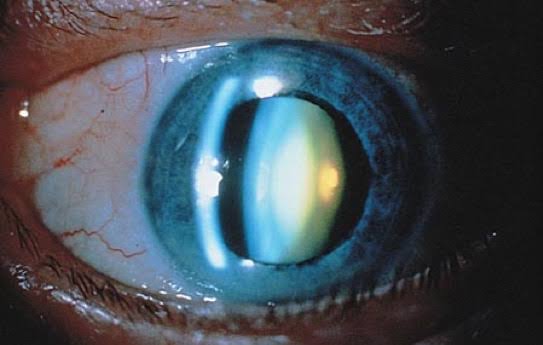
The Post-Surgical Frustration: When "Premium" Doesn't Look Clear
It is a surprisingly common and heart-wrenching story across Downtown Houston, Sugar Land, and Webster. You reach the point where the natural lens inside your eye has clouded over with a cataract. You decide to invest out-of-pocket in a top-tier Premium Intraocular Lens (IOL)—a sophisticated multifocal, extended-depth-of-focus (EDOF), or toric lens designed to grant you total independence from reading glasses and bifocals.
The surgery goes smoothly, the cataract is removed, and the surgeon confirms the procedure was a technical success.
Yet weeks later, your vision feels smeary, unstable, or covered in a subtle haze. Night driving brings harsh rings and starbursts around headlights, and reading fine print still requires a pair of cheap magnifying readers.
When you ask why your high-tech lens isn't performing, you are often told, "The lens is positioned perfectly. You just have dry eyes."
At Evolutionary Eye Care, we believe this conversation happens entirely too late. In 2026, waiting until after cataract surgery to address ocular surface disease is the single biggest mistake a patient can make. If your tear film is inflamed and unstable during your pre-operative measurements, the computerized biometry scans will miscalculate the power of your implant—locking you into the wrong prescription.
The Math of the Tear Film: Why Your Cornea Dictates Lens Power
When preparing for cataract surgery, your surgical team uses high-precision lasers and optical biometers to measure the physical shape and curvature of your front window (your cornea). These calculations tell the computer exactly what power of artificial lens to insert inside your eye.
Here is the secret most patients aren't told: Your tear film accounts for over 70% of your eye's total focusing power.
Before light ever touches your cornea, your natural lens, or your retina, it must pass through the ultra-thin layer of tears resting on the surface of your eye.
[Inflamed, Dry Tear Film] -> Cornea Looks Rough & Irregular on Laser Scans -> Computer Miscalculates IOL Power -> Implanted Lens Has Wrong Prescription
If you have underlying Meibomian Gland Dysfunction (MGD) or Evaporative Dry Eye, your tear film is filled with microscopic dry spots, salt spikes, and rough oil patches.
When the pre-op biometry laser scans a dry eye, it sees a warped, irregular surface. The computer calculates the lens power based on a distorted reading. Once the surgeon implants that lens, no amount of healing will fix the fact that the underlying optical math was flawed from day one.
Pre-Op Prep vs. Post-Op Regret
| Pre-Surgical Condition | Impact on Biometry Laser Scans | Final Post-Cataract Visual Result |
| Unmanaged Dry Eye / MGD | Distorts corneal topography; causes inaccurate axis readings for astigmatism (Toric) lenses. | Persistent blur, unexpected need for glasses, night glare, and fluctuating vision. |
| Optimized, Smooth Tear Film | Delivers sub-micron accuracy for lens power, astigmatism alignment, and focal point depth. | Crisp, razor-sharp 20/20 clarity, seamless focal depth, and true glasses-free freedom. |
The 2026 Pre-Op Protocol: The Ocular Surface Reset
As specialized Therapeutic Optometrists co-managing surgical care across Houston, we partner with the region's top ophthalmic surgeons to perform a comprehensive Pre-Cataract Surface Optimization before your final surgical measurements are taken.
1. Thermal Gland Clearing & Low-Level Light Therapy (LLLT)
At our Webster and Sugar Land offices, we deploy non-invasive light technology to treat underlying eyelid inflammation. LLLT uses medical-grade light frequencies to warm the eyelids from the inside out, safely melting stagnant, waxy oils inside your Meibomian glands. Restoring a smooth, clean lipid layer over your tears ensures your corneal surface acts like a pristine piece of optical glass during pre-op scans.
2. Microblepharoexfoliation (BlephEx®)
We clear away bacterial biofilms, microscopic crusts, and inflammatory debris along the lash margins that could migrate into the surgical site or destabilize the post-op healing phase.
3. Tear Osmolarity & InflammaDry® Verification
We measure the exact salt concentration and inflammatory protein markers in your tears. We do not clear you for final surgical biometry until your surface metrics prove your tear film is completely stable, smooth, and healthy.
Protecting Your Investment Beyond Surgery
Once your premium lens is implanted over a perfectly prepared corneal surface, maintaining lid health ensures your vision remains vibrant for life.
Taking care of your ocular surface also provides the necessary foundation if you participate in high-level physical activities like Sports Vision & Performance, or if you utilize specialized secondary optics like Scleral Lenses or Adult Ortho-K.
Medical Eye Exam vs. Routine Vision Test
A standard storefront vision checkup or a quick surgical screening cannot measure tear film stability or hidden Meibomian gland atrophy.
Our specialized Medical Eye Exam for pre-cataract patients features advanced Corneal Topography, infrared Meibography (mapping the internal oil glands in 3D), and quantitative tear break-up timing.
Conclusion: Measure Twice, Cut Once
Investing in Premium Cataract Lenses should give you the best vision of your life, not a lifetime of frustrating blur and dry eye complications. The key to unlocking the true power of advanced multifocal and toric optics lies in the quality of your tear film on the day your eyes are measured. By completing a dedicated pre-operative surface reset, we can ensure your surgical math is flawless, protect your monetary investment, and hand you the crisp, beautiful clarity you expect.


WHERE TO FIND US Our Locations

© 2026 Evolutionary Eye Care . All Rights Reserved. Accessibility Statement - Privacy Policy - Sitemap
Powered by:

