


Why Getting Rid of Cataracts is Only Half the Battle for Perfect 20/20 Vision
The Refractive Shift: Re-engineering Your Visual Hardware
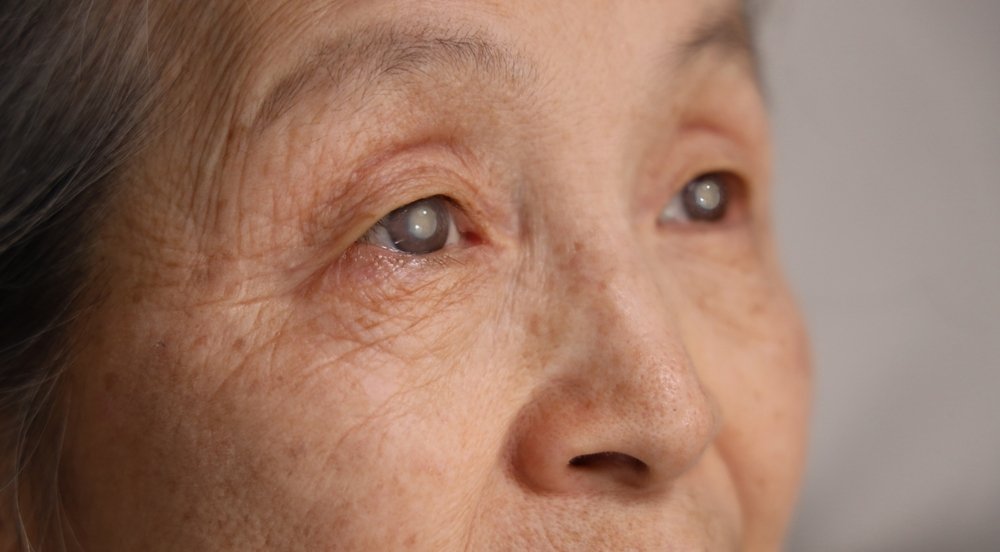
People used to think of cataract surgery as a way to fix what you’d lost. The surgeon took out your cloudy lens and swapped in a basic, clear plastic one. It cut the fog, but let’s be real—you still needed thick glasses to read, drive, or use your computer.
Now, in 2026, cataract surgery works at a completely different level. It’s not just about restoring vision anymore; it’s one of the most advanced refractive procedures out there.
So if you’re getting ready for surgery in places like Downtown Houston, Sugar Land, or Webster, you face a huge menu of high-tech options. Multifocal IOLs. Extended Depth of Focus (EDOF) lenses. And Light-Adjustable Lenses (LAL)—implants we can fine-tune after they’re in your eye.
But splurging on a premium lens doesn’t mean instant perfect vision. Real results come from matching that fancy hardware with your brain’s ability to adapt and taking good care of your eyes’ surface.
The Neuro-Adaptation Gap: Upgrading the Brain's Software
Here’s what happens: when you get a multifocal or EDOF lens, the way light enters your eye changes right away. These lenses split or stretch the light so you get images from distance, up close, and in between—all landing on your retina at the same time.
Sounds great, but your brain is still trying to run its old visual “software.” Suddenly, your eyes send it clear information from every distance all at once. Now, your brain has to adapt. This process, called Neuro-Adaptation, isn’t automatic. Your visual cortex has to learn to pick out the near image when you’re reading your phone and ignore the distance one—or do the opposite when you’re looking far away.
If your eyes already have a slight alignment problem (called Binocular Vision Dysfunction), your brain can get overwhelmed. The new data jams the system, and you might end up with hazy vision, ghosting, or those frustrating halos at night—even if the surgical result was technically flawless.
The Post-Op Visual Catalyst: Light-Adjustable Lenses (LAL)
For patients who want top-shelf vision, Light-Adjustable Lenses are in their own league.
The implant itself responds to light. Once your eye heals, you come back to our clinic, and we use a UV light device to shape the lens right inside your eye—no sharp tools, no extra surgery.
This means we can test your vision, correct for astigmatism, adjust your depth of focus, and dial in your specific needs—then lock that profile in for good.
The Premium Lens Killer: Dry Eye Syndrome
But here’s the kicker: you could have the smartest lens on earth, but if your tear film—the layer of moisture across your eye—is dry, rough, or patchy, the image gets warped.
Cataract surgery always disturbs the delicate nerves in your cornea, so your eyes make less of their own tears. On top of that, the antibiotic drops you need before and after surgery usually contain preservatives that irritate your eyelids and set off Meibomian Gland Dysfunction (MGD).
We aren’t passive about this. At our Dry Eye Center of Excellence in Houston, we jump in early—before and after your surgery. We use Low-Level Light Therapy at our Webster and Houston clinics to unclog oil glands and bring down surface inflammation. If you want your premium lens to actually perform, you need a flawless tear film to let the optics do their job.
Medical Eye Exam vs. Routine Vision Test
Managing a premium cataract upgrade takes more than a normal vision check. Regular eye exams don’t measure your contrast sensitivity or pick up on subtle issues like higher-order aberrations after surgery.
That’s why our Medical Eye Exam digs a lot deeper, with high-definition optical coherence tomography (OCT) to make sure your macula is looking good before you choose a lens. We also track the eye-brain connection closely to speed up Neuro-Adaptation.
So whether you want to sharpen your tracking for sports, or you’re grinding hours behind a screen in Houston, the way we manage you after surgery really decides how clear your vision gets.
Conclusion: Optimize Your Investment
Cataract surgery isn’t just a fix; it’s one shot to truly design the way you see the world. Don’t let your results fall short because you skipped out on surface health or brain-eye training. Take smart advantage of modern lens tech, fine-tuned Neuro-Adaptation, and proactive surface therapies—and you’ll see what these upgrades are really capable of.


WHERE TO FIND US Our Locations

© 2026 Evolutionary Eye Care . All Rights Reserved. Accessibility Statement - Privacy Policy - Sitemap
Powered by:

