


Why That Yellowish Bump on Your Eyeball Isn't Just "Dust" (And How the Texas Sun Drives It)
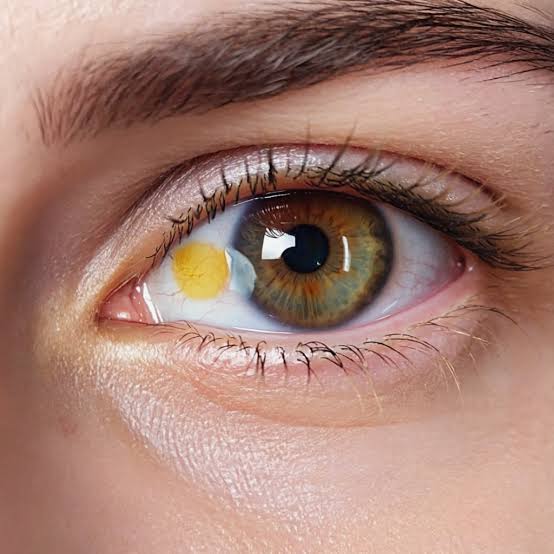
The Fleshy Intrusion: When Texas Sun and Dust Warps the Eyeball
It is an increasingly frequent concern for outdoor enthusiasts, runners, construction leaders, and boaters across Downtown Houston, Sugar Land, and Webster. You look in the bathroom mirror and notice a raised, yellowish bump on the white part of your eye (pinguecula). Over time, that bump turns red, grows blood vessels, and begins physically creeping onto the clear window of your cornea (pterygium or "Surfer's Eye").
Your eye feels perpetually bloodshot, scratchy, and dry—as if sand from Galveston Beach is permanently trapped under your eyelid.
When you apply over-the-counter redness-relief drops, the blood vessels constrict for an hour, only to rebound back larger and angrier than before.
At Evolutionary Eye Care, we regularly treat UV-driven surface growths. Living in the Greater Houston area means exposing your eyes to intense year-round solar radiation, coastal winds, and ambient humidity. Left unchecked, a growing pterygium won't just look red—it will physically pull on your cornea, inducing severe Irregular Astigmatism and blocking your central visual axis.
The UV Mechanism: How Solar Radiation Triggers Tissue Growth
A pterygium is a non-cancerous, fibrovascular growth driven by cellular degradation. When high-energy ultraviolet (UV) light continuously strikes the conjunctiva (the clear membrane over the white of the eye), it destroys the elastic fibers in the tissue.
[Chronic UV Radiation & Wind/Dust Exposure] -> [Conjunctival Elastic Tissue Breakdown] -> [Fibrovascular Proliferation] -> [Growth Creeps Over Cornea]
Combined with chronic dry eye and dust irritation, this damaged tissue begins to proliferate. It builds its own hyper-sensitive capillary network, drawing blood flow to expand inward toward the center of your eye.
| Growth Stage | Physical Characteristics | Visual & Mechanical Impact |
| Pinguecula (Precursor) | Raised, yellowish protein deposit localized only on the white conjunctiva. | Surface grittiness, local redness, tear film instability. |
| Early Pterygium | Fleshy, wedge-shaped tissue crosses the corneal limbus border. | Induces localized corneal flattening, causing erratic astigmatism. |
| Advanced Pterygium | Fleshy growth approaches or covers the central pupil. | Direct visual blockage, severe distortion, and eye movement restriction. |
The 2026 Interception Track: Halting Growth and Protecting the Cornea
You do not have to wait for a surface growth to cover your pupil before taking medical action. Early intervention prevents surgical scarring and protects your corneal architecture.
As a specialized Dry Eye and Ocular Surface Center of Excellence, we deploy targeted therapies at our Webster, Houston, and Sugar Land clinics:
1. Surface Inflammation Reset via Low-Level Light Therapy (LLLT)
A pterygium thrives on chronic surface inflammation. We deploy non-invasive Low-Level Light Therapy (LLLT) at our Webster and Sugar Land locations to unblock congested Meibomian glands, reduce conjunctival vascular swelling, and restore a protective lipid seal over your tears. Starving the growth of inflammatory signals halts its urge to expand.
2. Custom Scleral Shielding
For advanced pterygiums causing severe discomfort, we fit custom Scleral Lenses. These rigid gas-permeable lenses vault completely over the corneal surface without touching the growth. The continuous saline reservoir protects the elevated tissue from eyelid friction while smoothing out irregular astigmatism to restore crisp sight.
3. Surgical Co-Management with Auto-Grafting
If a pterygium requires surgical removal, we co-manage your procedure with top corneal surgeons in Houston. We ensure the use of modern conjunctival autografting and amniotic membrane tissue patches, dropping surgical recurrence rates from 50% down to under 1%.
Whether you are preserving visual stamina for corporate leadership, fine-tuning spatial tracking for Sports Vision & Performance, or integrating specialty optics like Adult Ortho-K, maintaining a smooth corneal window is essential.
Medical Eye Exam vs. Routine Vision Test
A pterygium cannot be properly monitored through a basic storefront vision chart. Reading 20/20 on a distance wall test proves your central lens functions under ideal conditions, but it completely misses early corneal tissue distortion and vascular expansion.
Our comprehensive Medical Eye Exam for ocular surface growths includes 3D Corneal Topography (mapping how much irregular astigmatism the growth is inducing down to the micron) and high-magnification anterior segment photography to track millimeter growth over time.
Conclusion: Protect Your Corneal Architecture
A red, fleshy growth on your eye is not something you have to hide behind sunglasses or manage with stinging redness drops. Pterygium and Pinguecula are manageable ocular surface conditions, and early medical intervention stops their progress before vision loss occurs. By combining 3D corneal topography, thermal light therapy, and custom scleral shielding, we can cool the inflammation, smooth out surface distortions, and keep your eyes comfortable and white.


WHERE TO FIND US Our Locations

© 2026 Evolutionary Eye Care . All Rights Reserved. Accessibility Statement - Privacy Policy - Sitemap
Powered by:

