


Why Sudden "Floaters and Cobwebs" in Your Vision Mean Your Eye is Entering a New Phase
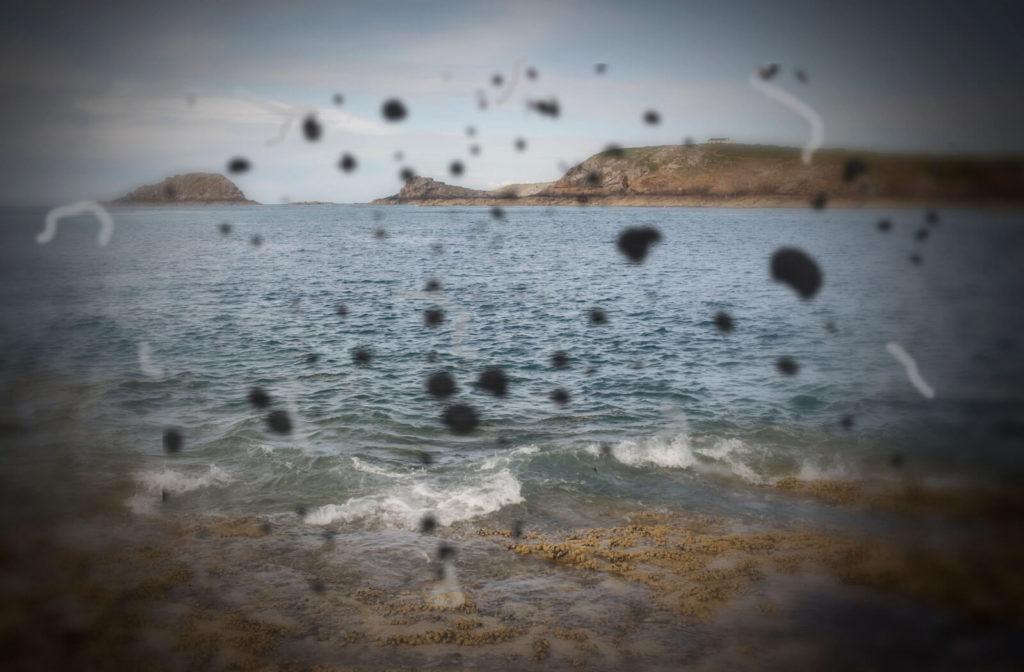
The Drifting Shadow: Understanding Floaters, Flashes, and PVD
It is a weird, somewhat jarring moment. You are just sitting at home in Sugar Land scrolling on your tablet, or maybe taking an afternoon walk through Webster, and then you see it: a dark shape drifts across your vision. It might look like a stray hair, a fly that isn't actually there, or a faint spiderweb floating in mid-air. You try to look right at it, but it darts away immediately. Then, later that night, you notice quiet little sparks or flashes of light out of the corner of your eye.
At Evolutionary Eye Care, we see hundreds of people dealing with this exact scenario. Most of them come into our clinics feeling pretty anxious, worried they might be going blind.
For the vast majority of people over 50, these symptoms are actually signs of a very common condition called a Posterior Vitreous Detachment (PVD). It is a normal part of how the eye ages and does not cause blindness on its own. The real challenge is that a PVD looks and feels exactly like a retinal tear—which is a medical emergency. Being able to tell the difference is a big deal for keeping your sight safe.
The Anatomy of a Floater
To understand what is happening, you have to look at how the inside of the eye is built.
The main chamber of your eye is filled with a thick, clear gel called the vitreous humor (it has a consistency similar to egg whites). This gel helps the eye keep its round shape and sits directly against the retina, the light-sensing tissue lining the back wall of the eye.
As we celebrate more birthdays, that gel starts to change. It thins out, shrinks, and develops microscopic pockets of fluid. Eventually, the gel contracts enough that it physically peels away from the retina.
The Floaters: If the gel separates cleanly, that is a standard PVD. Those annoying cobwebs and spots you see are just microscopic fibers within the gel clumping together. They cast tiny shadows on your retina when light enters your eye.
The Flashes: Flashes happen if the gel tugs on the retina while it is pulling away. Because the cells in your retina only know how to send light signals to the brain, your mind interprets that physical tugging as a flash of lightning.
The 15% Risk: When a PVD Turns Dangerous
In about 85 percent of cases, the gel comes off smoothly. You get some pesky new floaters, but the eye stays completely healthy. However, for about 15 percent of people, the gel is stuck too tightly to a weak spot on the retina. When it pulls, it can actually rip the retinal tissue.
If a retinal tear goes untreated, fluid can leak through the rip and lift the retina off the back wall of the eye—much like damp wallpaper peeling off a wall. That is a retinal detachment, and it is a major surgical emergency.
Because the retina has no pain receptors, you cannot feel a tear happening. This is why paying attention to visual warning signs is your only line of defense.
Red Flags: Is It a Normal PVD or an Emergency?
While only an eye doctor can tell you for sure, here is how the symptoms generally compare:
Normal PVD Sign: A few new spots, a faint web, or a single translucent ring (called a Weiss Ring) that drifts when you move your eyes.
Retinal Emergency Sign: A sudden, overwhelming shower of hundreds of tiny black "pepper spots" or dust particles.
Normal PVD Sign: Occasional sparks or quick glints of light in the dark that gradually calm down.
Retinal Emergency Sign: Aggressive, constant, or flashing lights that do not stop, or a dark shadow/curtain pulling across your peripheral vision.
How We Investigate Your Retina
At our downtown Houston clinic, we do not guess when it comes to your vision. If you experience new flashes or floaters, you need a specialized Medical Eye Exam, not a routine vision test for glasses.
We utilize high-definition imaging and perform a full, 360-degree dilated check to examine the very edges of the eye where tears like to hide. We also use Optical Coherence Tomography (OCT)—an advanced ultrasound-like light scan—to see exactly where the gel is pulling and ensure it isn't lifting the retinal tissue.
The Surface Connection: Dry Eye and Visual Clarity
A sudden shift in your vision can cause you to blink more frequently, which can inadvertently dry out your eyes and cause fatigue. Furthermore, if you already struggle with dry eyes, your floaters will actually look worse because light is passing through a rough, uneven tear film before it even hits the gel.
At our Dry Eye Center of Excellence Houston, we use Low-Level Light Therapy (LLLT) to treat the eyelid's oil glands and smooth out the ocular surface. Ensuring the front of your eye is perfectly hydrated helps your brain naturally filter out and ignore those new floaters over time.
Clear Sight, Clear Mind
Whether you are keeping your eyes sharp for sports or just need to see safely while driving around the Houston area, catching structural changes early is key. A sudden rush of floaters is essentially your eye telling you that something inside has shifted. While a PVD is a normal milestone in life, you must ensure your retina didn't get caught in the crossfire.


WHERE TO FIND US Our Locations

© 2026 Evolutionary Eye Care . All Rights Reserved. Accessibility Statement - Privacy Policy - Sitemap
Powered by:

