


Why Your CPAP Machine and Sleeping Position Might Be Secretly Starving Your Eyes of Oxygen
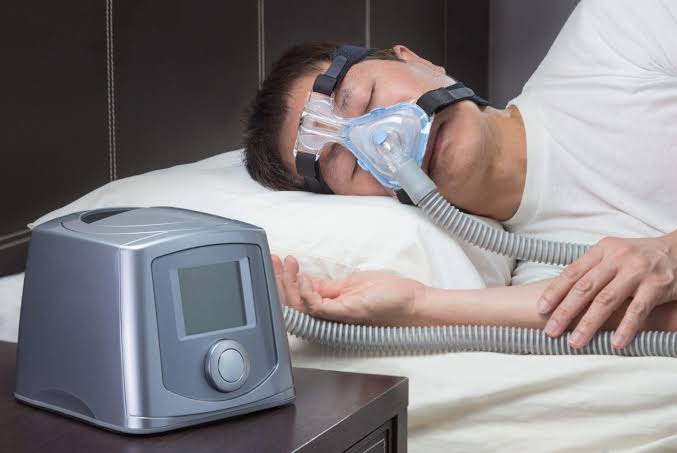
The Morning Exhaustion: When Sleep Saforages Your Sight
For many adults across Downtown Houston, Sugar Land, and Webster, a diagnosis of Obstructive Sleep Apnea (OSA) is framed entirely around daytime fatigue, loud snoring, and cardiovascular strain. You adjust to wearing a CPAP mask or using an oral appliance, tracking your nightly sleep cycles with the hope of reclaiming your daily energy.
Yet, you notice a frustrating trend every morning: You wake up with eyes that feel bone-dry, look severely bloodshot, or are coated in a thick, sticky film. Perhaps you’ve even noticed your eyelids feel strangely loose, easily flipping inside out when you rub them or adjust your pillow.
When you bring this up during a standard physical, it’s easy to brush it off as simple bedroom allergies or standard tiredness.
In 2026, systemic neuro-optometry recognizes that the eyes are not isolated from your respiratory health. Your nighttime breathing patterns—and the devices you use to manage them—profoundly dictate your visual health. If you are living with sleep apnea, your eyes face a dual threat of structural damage and nocturnal oxygen deprivation.
The Eyelid Laxity Loop: Floppy Eyelid Syndrome (FES)
One of the most profound mechanical side effects of sleep apnea is Floppy Eyelid Syndrome (FES). This condition features a progressive loss of elastin in the tarsal plate—the rigid structural backbone of your eyelids.
The Pillow Friction: When you sleep on your side or stomach (a common habit for sleep apnea sufferers trying to keep their airways clear), a loose upper eyelid can easily catch on your pillowcase. As you shift at night, the eyelid mechanically flips inside out.
The Exposure Shock: This leaves the delicate, interior conjunctival lining of your eye completely exposed to the open air, friction from bedding, and ambient fan currents for hours at a time.
The Morning Aftermath: You wake up with chronic, one-sided redness, a thick mucous discharge (as the eye attempts to protect itself from extreme drying), and an eyelid that feels stretched and unsupportive.
The Silent Deprivation: Nocturnal Hypoxia and Glaucoma
While Floppy Eyelid Syndrome targets the front of your eye, sleep apnea launches a secondary, silent assault on the back of your eye.
Every time your airway collapses during sleep, your blood oxygen levels plummet. This state of low oxygen, known as Nocturnal Hypoxia, puts an immense strain on your vascular system. Your optic nerve requires a non-stop, high-volume supply of oxygenated blood to transmit visual data from your eye to your brain.
[Sleep Apnea Airway Collapse] -> [Nocturnal Hypoxia (Oxygen Drops)] -> [Optic Nerve Starvation] -> [Normal-Tension Glaucoma Progress]
When your system is starved of oxygen multiple times an hour, the micro-capillaries feeding the optic nerve constrict and malfunction. Over time, this cellular starvation causes the delicate nerve fibers to thin out and die.
This is why sleep apnea is one of the primary drivers of Normal-Tension Glaucoma—a dangerous form of the disease where progressive peripheral blindness occurs despite your daytime eye pressure readings looking completely normal.
The CPAP Trap: Managing the Treatment Backlash
Even if you are successfully utilizing a CPAP machine, your eyes are not automatically out of the woods.
If your CPAP mask has even a microscopic seal leak around the bridge of your nose, the machine will continuously blast a steady stream of pressurized air directly across your eyes all night long. This unintended air current strips away the protective lipid layer of your tear film, resulting in an incredibly aggressive form of nocturnal Evaporative Dry Eye.
At our Dry Eye Center of Excellence Houston, we specialize in intercepting this treatment backlash. We utilize Low-Level Light Therapy (LLLT) at our Webster and Sugar Land offices to treat the underlying inflammation caused by nightly mask leaks. LLLT applies medical-grade light frequencies to melt hardened oils and clear blocked Meibomian glands. Restoring your eye's natural oil seal prevents your tears from vaporizing against your CPAP air streams.
Additionally, we fit patients with specialized, moisture-chamber sleep goggles and therapeutic custom night shields that physically lock hydration against the cornea, keeping your eyes perfectly calm and insulated while your respiratory machine keeps you breathing.
Medical Eye Exam vs. Routine Vision Test
You cannot discover nocturnal vascular starvation or eyelid elastin loss through a basic storefront refraction chart. If your doctor only checks whether you can see 20/20, these deeper systemic markers will be missed completely.
Our comprehensive Medical Eye Exam protocol includes high-resolution Optical Coherence Tomography (OCT) to map the structural thickness of your retinal nerve fibers down to the micrometer, automated visual field thresholds to screen for silent peripheral blind spots, and a mechanical evaluation of your eyelid tension to safeguard your ocular surface.
Whether you are protecting your visual endurance for corporate leadership, managing your depth perception for Sports Vision & Performance, or integrating your care with specialized Scleral Lenses or Adult Ortho-K, look at the complete health profile of your body.
Conclusion: Breathe Easy, See Clearly
Your body does not function in silos. A struggle to breathe comfortably at night leaves a permanent footprint on how clearly and comfortably you see during the day. If you are managing sleep apnea and are tired of waking up to burning, red, or strained eyes, it is time to upgrade your diagnostic defense. By identifying the subtle structural and vascular links between your sleep patterns and your sight, we can protect your optic nerve, restore your eyelid stability, and help you greet every morning with absolute comfort.


WHERE TO FIND US Our Locations

© 2026 Evolutionary Eye Care . All Rights Reserved. Accessibility Statement - Privacy Policy - Sitemap
Powered by:

