


Why Your Eye Bulging and Sudden Double Vision Aren't "Just Stress"
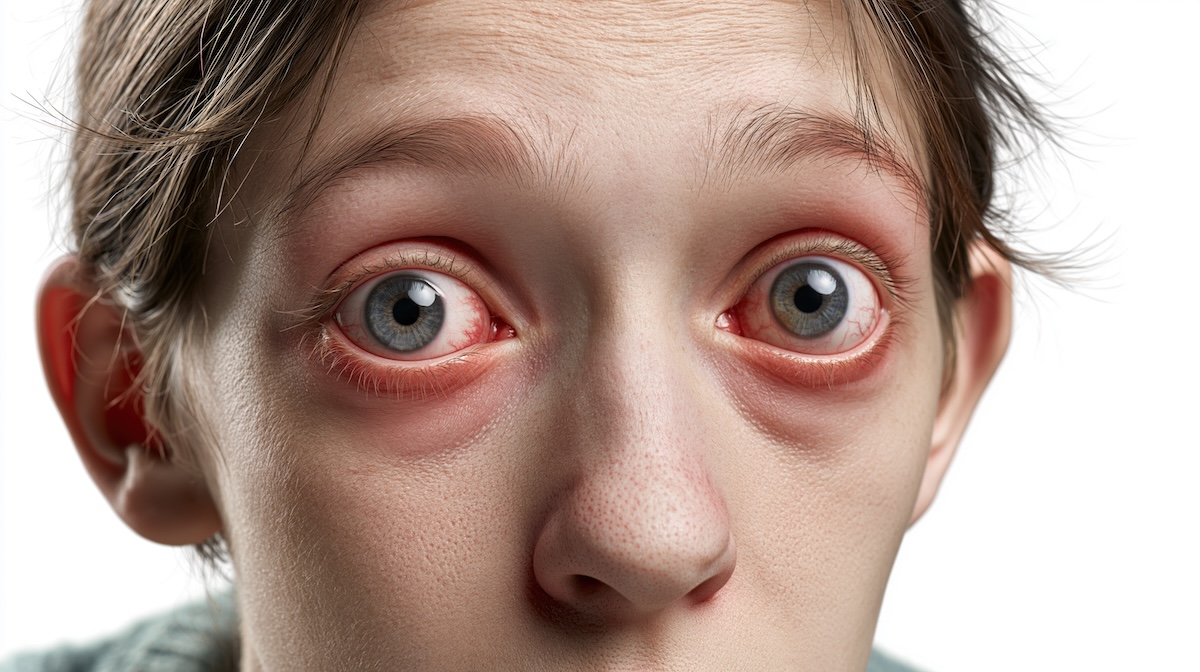
The Uncomfortable Stare: When Your Thyroid Targets Your Eyes
It usually sneaks up on you—a strange tight sensation behind your eyes that just won’t go away. Maybe you’re getting ready for work in Sugar Land, Webster, or Houston, and the person staring back at you in the mirror looks… different. Your eyes seem wider, a little too prominent, or stuck in a constant look of surprise. Sometimes your eyelids pull up higher, showing too much white above your irises.
After a few more weeks, life gets a lot tougher. Your eyes start to burn because your eyelids, now retracted, don’t close all the way when you blink or sleep. It’s constant. To make things worse, looking across a room or glancing at your car’s dashboard splits everything in two—double vision that forces you to tilt your head just to keep your perspective together.
If you have Graves’ disease, hyperthyroidism, or even hypothyroidism, this isn’t some side issue. This is likely Thyroid Eye Disease (TED), a condition where your immune system goes rogue, attacking fat and muscle tissue in your eye sockets.
What’s Actually Happening Behind Your Eyes?
Thyroid Eye Disease isn’t just about your thyroid hormone levels. Your blood work might be stable—your endocrinologist is probably on top of that—but the inflammation in your eye sockets has its own agenda, and it can keep raging even when the rest of your body feels under control.
Here’s the chain reaction: antibodies go after orbital tissue -> fat and muscles around your eyes swell up -> your eyeball gets pushed forward -> your eyes dry out, vision doubles.
Two big problems follow:
1. Muscle Expansion and Strabismus: The muscles that move your eyes swell and stiffen, stuck inside the bone of your orbit. They can’t move smoothly anymore. This throws off alignment and leaves you with double vision that just won’t quit.
2. Exposure Keratitis: Swollen tissue pushes your eyeballs outward. Your eyelids can’t cover them like they’re supposed to, so the corneas dry out, develop raw spots, and turn painfully sensitive to light.
Managing TED: Active vs. Stable Phases
Here’s how TED unfolds:
Active (Inflammatory) Phase: Your eyes feel swollen, red, uncomfortable, maybe even painful, and your vision keeps changing. The main goal here? Reduce inflammation, protect your corneas, and get you proper medications, sometimes including biologics.
Stable (Fibrotic) Phase: The swelling stops, but the damage sticks around—scarred tissue leaves you with permanent double vision or pulled eyelids. Now it’s about optics, prism lenses, or even eyelid surgery to restore as much function as possible.
The 2026 Medical Approach: How We Tackle TED
Treating TED is all about protecting your eyes and clearing up your vision so you can actually live your life—drive, work, and read safely. At our clinics in Webster, Houston, and Sugar Land, this is where we focus:
1. Scleral Lens Fluid Vaulting
Standard eye drops just disappear in seconds when your cornea is exposed. We use custom Scleral Lenses that arch over the sensitive cornea, resting on the white part of your eye. These are filled with sterile saline, so your cornea sits in a liquid bath all day. This keeps tissue hydrated, prevents ulcers, and stops the pain from wind and blinking.
2. Micro-Prisms for Double Vision
If your eye muscles are swollen and misaligned, we add micro-prisms to your glasses or contacts. These prisms redirect incoming light to line up your double vision, so you’re not forced to wear an eye patch or constantly tilt your head.
3. Biologic Therapy Coordination (Tepezza®)
During the active phase, we team up with your endocrinologist or neuro-ophthalmologist to consider treatments like Teprotumumab, a biologic that targets swelling and eye bulging at the source.
Keeping Your Eye Surface Healthy When Things Get Rough
All this corneal exposure quickly ruins your natural tear film. If your eyelids can’t spread a protective oil layer, Meibomian Gland Dysfunction (MGD) sets in fast.
At our Houston Dry Eye Center, we help keep your eye surface stable, especially in the middle of an autoimmune flare. We use Low-Level Light Therapy (LLLT) at our Sugar Land and Webster clinics to clear out clogged oil glands, reduce redness, and support a healthy tear barrier. This keeps your eyes comfortable and your vision sharp—whether you’re leading meetings, working on your golf swing, or wearing specialty contact lenses.
Why a Medical Eye Exam Is Essential
A basic vision test at the mall won’t catch TED. Just because you can read 20/20 letters doesn’t mean your orbits, nerves, or corneas are safe. Our TED eye exams are more thorough: we measure how far your eyes are actually protruding, use HD imaging (OCT), check for optic nerve pressure, and stain the cornea to see if it’s breaking down.
The Takeaway: You Can Protect and Realign Your Eyes
Bulging eyes, facial pain, double vision from TED—yeah, it’s scary. You don’t have to tough it out or live with blurry, painful vision. With today’s specialty care (scleral lenses, prisms, light therapy), we can hydrate your corneas, line up your vision, and help you navigate life with confidence. TED is tough, but it is treatable, and you don’t have to face it alone.


WHERE TO FIND US Our Locations

© 2026 Evolutionary Eye Care . All Rights Reserved. Accessibility Statement - Privacy Policy - Sitemap
Powered by:

