


Why Your Thyroid Medication Isn't Fixing Your Changing, Bulging, or Burning Eyes
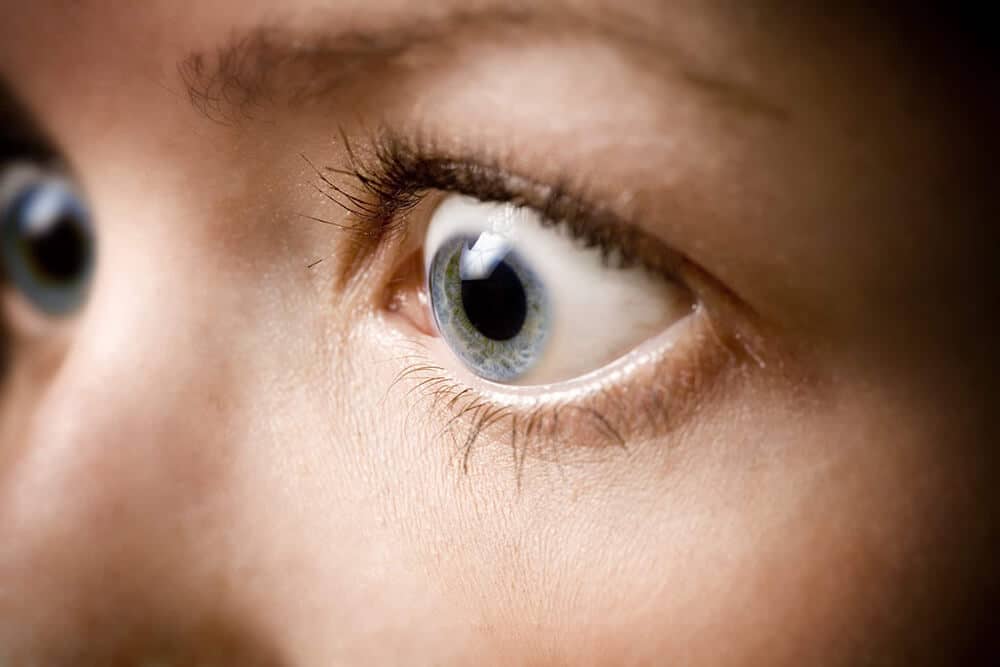
When Autoimmunity Alters Visual Function: The Pathophysiology of Thyroid Eye Disease (TED)
For many individuals in Downtown Houston and Sugar Land managing thyroid dysregulation such as Graves' disease, achieving systemic hormonal stabilization is often viewed as the final clinical objective. However, a significant subset of patients subsequently develops a distinct autoimmune inflammatory pathology: Thyroid Eye Disease (TED). A critical clinical reality in May 2026 is that stabilizing serum thyroid levels does not resolve the independent inflammatory cascade within the orbit; TED requires specialized, autonomous ophthalmic intervention.
The Mechanism of Orbital Inflammation
TED is characterized by an autoimmune response wherein antibodies target specific receptors?primarily the IGF-1 receptors?located in the retro-orbital connective tissues and extraocular muscles. This triggers a complex inflammatory cycle:- Orbital Expansion (Proptosis): Chronic inflammation and adipogenesis (fat production) behind the globe increase retro-bulbar pressure, displacing the eyeball anteriorly. This results in the characteristic "bulging" appearance or a startled stare.
- Eyelid Retraction: Inflammatory contracture of the levator and Mueller?s muscles pulls the eyelids into a retracted position, often resulting in lagophthalmos (the inability to achieve complete eyelid closure), which is particularly damaging during nocturnal hours.
- Fibrotic Muscle Restriction:As extraocular muscles undergo scarring and lose elasticity, they fail to coordinate binocular movement, leading to persistent **Diplopia** (double vision).
The Exposure-Induced Dry Eye Complication
Due to the combination of proptosis and eyelid retraction, the blink mechanism is severely compromised. This leads to accelerated tear film evaporation and prolonged corneal exposure. At the Evolutionary Eye Care Dry Eye Center of Excellence, clinicians find that TED patients often exhibit advanced corneal desiccation that is refractory to standard lubricant protocols.Clinical Protocols for TED Management
As specialized **Therapeutic Optometrists** in Downtown Houston, the clinical team utilizes a multi-modal approach to protect ocular integrity and manage the active inflammatory phases of TED:1. Scleral Lens Prosthetics: When eyelid retraction prevents adequate lubrication, Scleral Lenses serve as a "liquid shield." These large-diameter, gas-permeable lenses vault over the compromised cornea, maintaining a continuous reservoir of sterile saline against the ocular surface. This provides a constant moisture barrier and protects the cornea from atmospheric exposure.
2. Low-Level Light Therapy (LLLT):TED frequently induces severe eyelid congestion and secondary Meibomian Gland Dysfunction (MGD). The clinic utilizes LLLT to down-regulate vascular inflammation in the lids, facilitating the liquefaction of obstructed lipids and promoting more stable tear production.
3. Prismatic Correction: If extraocular muscle imbalances occur, light is no longer focused on corresponding retinal points. Following a detailed Binocular Vision Evaluation, clinicians can incorporate micro-prisms into the patient?s lenses to optically realign the visual axes and eliminate diplopia.
Medical Ophthalmic Monitoring vs. Basic Refraction
Management of TED necessitates rigorous medical monitoring that exceeds the scope of a routine vision test. A **Medical Eye Exam** at Evolutionary Eye Care includes quantitative measurement of proptosis (exophthalmometry), assessment of the optic nerve for potential compressive optic neuropathy, and monitoring of intraocular pressure, which may elevate due to orbital congestion.Conclusion: Mitigating Autoimmune Visual Degradation
Thyroid Eye Disease significantly impacts both visual function and aesthetic appearance. However, the inflammatory phase can be managed through advanced moisture-retaining scleral optics and targeted light therapies. By addressing the autoimmune fire directly, Evolutionary Eye Care works to preserve corneal health and restore functional comfort for thyroid patients.


WHERE TO FIND US Our Locations

© 2026 Evolutionary Eye Care . All Rights Reserved. Accessibility Statement - Privacy Policy - Sitemap
Powered by:

