


Why You See Constant "TV Static" in the Dark (And Why Standard Eye Exams Miss It)
The Unseen Grain: When Your Brain's Noise Filter Fails
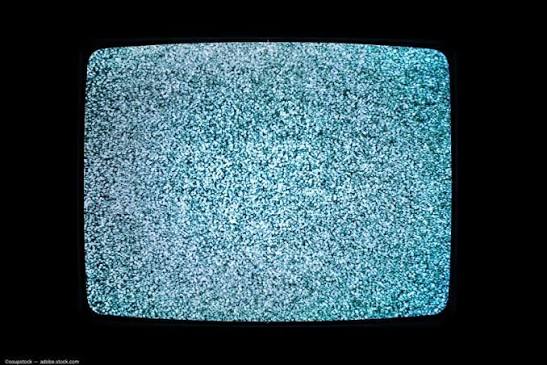
It is a lonely, exhausting reality for adults and young professionals across Downtown Houston, Sugar Land, and Webster. You look up at a clear blue sky, gaze at a blank wall, or turn off the lights to sleep, and your entire field of view is covered in a continuous layer of flickering, grain-like "static"—resembling an old analog television tuned to an off-air channel.
Along with the constant noise, you notice other unsettling visual symptoms:
Palinopsia: Objects leave long, persistent "ghost trails" or lingering afterimages behind them as they move.
Enhanced Entoptic Phenomena: You see bright swarming dots zipping across bright backgrounds or prominent floaters that refuse to settle.
Photophobia & Tinnitus: Normal ambient lights feel intensely harsh, frequently accompanied by a high-pitched, ringing sound in your ears.
You visit traditional eye clinics, undergo retinal scans, and receive the exact same answer every time: "Your eyes are 100% healthy, and your vision is 20/20. It's just anxiety."
At Evolutionary Eye Care, we know you aren't imagining this static. You are living with Visual Snow Syndrome (VSS)—a real, measurable neuro-visual condition where your brain's internal visual filter has turned its gain up too high.
The Neurological Volume Knob: What Causes Visual Snow?
To understand Visual Snow Syndrome, you have to separate the camera (your eye) from the processor (your brain).
In a healthy system, your eyes collect millions of raw visual signals every second, including natural background noise. Before that data reaches your conscious awareness, a subcortical filtering hub called the thalamus dampens unnecessary background static so you see smooth, clean images.
With Visual Snow Syndrome, a disruption known as Thalamocortical Dysrhythmia occurs.
[Visual Data Collected] -> [Thalamocortical Dysrhythmia (Filter Failure)] -> [Visual Cortex Hyper-Excitability] -> [Persistent "TV Static" & Image Trailing]
The visual processing centers in your lingual gyrus and primary visual cortex become hyper-excitable. Because the brain's internal noise filter is offline, you consciously perceive the background electrical noise that should normally be filtered out—day and night, with your eyes open or closed.
Visual Snow Syndrome vs. Standard Structural Eye Symptoms
| Visual Metric | Structural Eye Issues (Floaters / Dry Eye) | Visual Snow Syndrome (VSS) |
| Static Presence | Absent. Vision is clear between floaters or dry spots. | Present 100% of the time, filling the entire visual field evenly. |
| Lighting Behavior | Worse in bright light or on white backgrounds. | Highly noticeable in bright light and amplified in complete pitch darkness. |
| Associated Markers | Isolated to local eye irritation or physical specks. | Frequently co-exists with tinnitus, trailing afterimages, and migraine. |
| Eye Exam Results | Shows structural changes on retina or corneal surface. | Eye structure is completely normal on all standard eye scans. |
The 2026 Neuro-Optometric Management Blueprint
While there is no single "cure-all" pill for Visual Snow Syndrome, modern neuro-optometry utilizes targeted strategies to reduce visual cortex excitability and quiet the static:
1. Precision Colorimetry & Spectral Filtering
Specific wavelengths of light trigger higher levels of cortical firing. Using precise color-matching diagnostics, we identify custom optical filter tints (such as specialized FL-41, FL-60, or custom-calibrated colorimetry lenses) that selectively block the specific light frequencies driving your brain's hyper-excitability. This noticeably lowers the intensity of the static and eases photophobia.
2. Micro-Prism Alignment (Neurolens®)
If your visual system is fighting a subtle, underlying binocular alignment failure, your trigeminal nerve remains under constant stress, feeding neurological hyper-excitability. Fitting customized micro-prism optics realigns your eyes' natural posture, freeing up processing bandwidth and calming overall visual fatigue.
3. Neuro-Visual Habituation & Desensitization
We guide VSS patients through neuro-rehabilitative visual exercises designed to retrain how the brain prioritizes visual inputs, helping the visual cortex gradually habituate to and dial down the background noise over time.
The Corneal Health Intersect
Living with continuous visual noise puts your nervous system in a state of chronic sensory fatigue. High stress levels combined with hyper-focusing on screens or static drastically reduces your automatic blink rate, leading to aggressive Evaporative Dry Eye.
When your corneal surface breaks down, incoming light refracts erratically, creating extra glare that amplifies visual snow symptoms.
At our Dry Eye Center of Excellence Houston, we ensure your ocular surface is completely peaceful. We deploy non-invasive Low-Level Light Therapy (LLLT) at our Sugar Land and Webster locations to clear blocked Meibomian glands, eliminate lid inflammation, and restore a protective oil seal over your tears. A tranquil corneal window prevents unnecessary light scattering from adding extra noise to your brain's processing load.
Whether you are optimizing visual endurance for corporate performance, fine-tuning spatial tracking for Sports Vision & Performance, or managing specialty hardware like Scleral Lenses or Adult Ortho-K, neuro-surface balance is vital.
Medical Eye Exam vs. Routine Vision Test
Visual Snow Syndrome cannot be diagnosed through a basic storefront vision chart. Reading 20/20 on a wall test simply proves your eye's physical lens focuses light, completely ignoring how your brain processes that light.
Our comprehensive Medical Eye Exam for suspected VSS patients features an exhaustive Neuro-Optometric Processing Battery: assessing visual-cortical light sensitivity thresholds, colorimetry filtering response, automated visual field thresholds, and binocular alignment stress.
Conclusion: Quiet the Noise, Restore Your Peace
Living with constant visual static, image trailing, and light sensitivity is exhausting, especially when traditional eye doctors tell you nothing is wrong. Visual Snow Syndrome is a real neurological processing challenge, and modern neuro-optometry provides actionable ways to calm the visual cortex. By combining precision spectral color tinting, micro-prism alignment, and advanced surface light treatments, we can help reduce the static, drop the sensory overload, and give you back a calmer, more comfortable visual world.


WHERE TO FIND US Our Locations

© 2026 Evolutionary Eye Care . All Rights Reserved. Accessibility Statement - Privacy Policy - Sitemap
Powered by:

